If you are searching for an intimacy coordinator Japan, or if you are filming in Japan, shooting a television production in Japan, or bringing an international theatre or musical production to Japan, you may need to consider intimacy coordination earlier than you think.
An intimacy coordinator or intimacy director is not someone you call only after a problem has occurred.
In many cases, the most useful time to involve an intimacy professional is before the rehearsal room or filming day begins.
That may mean:
- at development stage,
- during script review,
- before casting or auditions,
- before table reads,
- before rehearsals,
- before filming,
- or when a production plan changes and intimate or physically sensitive content becomes clearer.
The earlier these conversations happen, the more creative and practical options the production has.
Intimacy coordination is not only for sex scenes or nudity
Many people still associate intimacy coordination only with kissing, simulated sex, or nudity.
Those scenes may certainly require support, but they are not the only situations where an intimacy coordinator or intimacy director may be useful.
Depending on the production, intimacy-related support may also be needed for scenes involving:
- kissing,
- simulated sex,
- nudity or partial nudity,
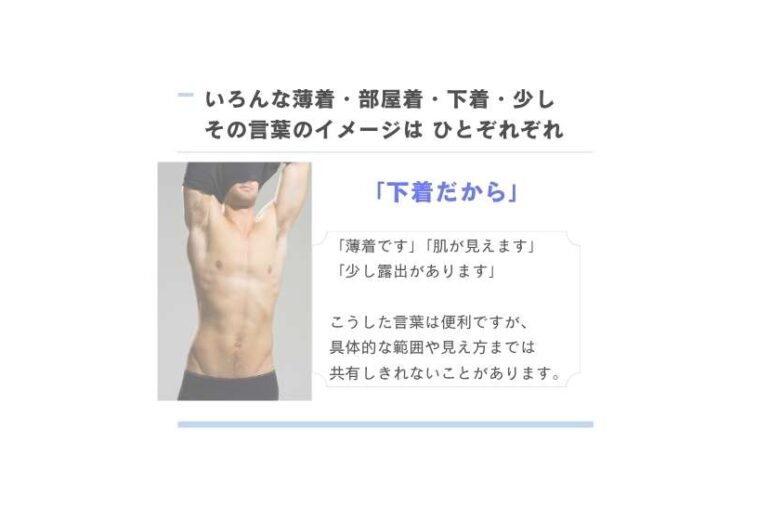
- underwear, swimwear, or revealing costumes,
- changing clothes,
- embraces or close physical contact,
- characters lying in bed together,
- bath scenes, hot springs, saunas, or showers,
- childbirth scenes,
- medical-looking procedures involving the body,
- physical contact within scenes of violence,
- or any scene where the actor’s body, privacy, exposure, or personal boundaries are directly involved.
The question is not only whether a scene is “sexual.”
The question is whether the scene involves physical contact, exposure, intimacy, vulnerability, or a level of bodily specificity that needs to be communicated clearly and repeated consistently.
Why early involvement matters
When intimacy-related scenes are left vague until the day of rehearsal or filming, everyone may end up working from different assumptions.
A director may imagine one level of contact.
An actor may understand the scene differently.
A producer may assume that the scene is already covered because it is written in the script.
Wardrobe, camera, lighting, choreography, blocking, schedule, and consent may all be affected by details that have not yet been clarified.
For example, a script may simply say:
- “They kiss.”
- “They get into bed.”
- “They embrace.”
- “She changes clothes.”
- “They are in the bath.”
- “They struggle on the floor.”
Each of these lines can be interpreted in many different ways.
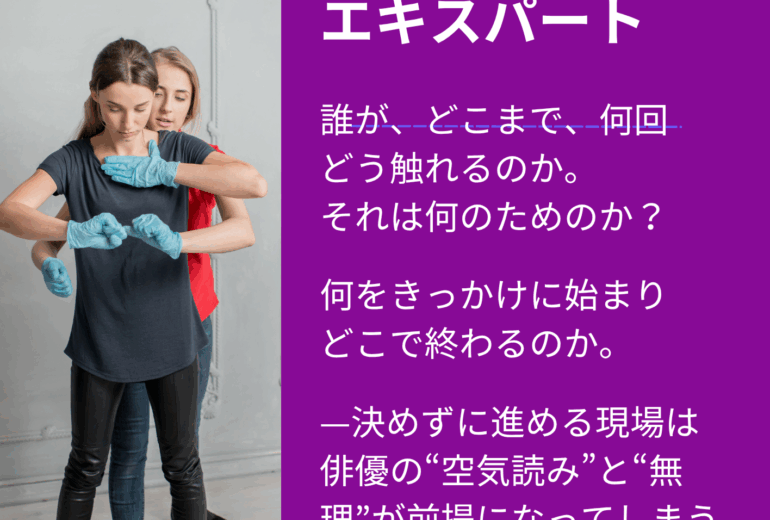
Where does the contact happen?
How much of the body is visible?
What is the camera or audience meant to see?
What is not meant to be seen?
Is the contact repeated several times?
Does the scene involve costume, water, bedding, prosthetics, modesty garments, or specific camera angles?
Is there a change in the scene after casting, rehearsal, location scouting, or shot planning?
These are not small details. They affect the actor’s preparation, the director’s choices, the production schedule, and the clarity of the work on set or in rehearsal.
Intimacy coordination supports the creative work
Intimacy coordination is sometimes misunderstood as something that limits expression.
In practice, the purpose is the opposite.
The goal is to make the creative work clearer, more repeatable, and more workable for everyone involved.
When the necessary contact, movement, boundaries, wardrobe considerations, and visual requirements are discussed in advance, actors can focus more fully on performance.
Directors can clarify the intended effect of the scene.
Producers and production teams can reduce last-minute confusion, unnecessary negotiation, and avoidable delays.
This is similar to how productions work with fight directors, stunt coordinators, movement directors, or choreographers.
Even a short action sequence may require a specialist.
Not because the actors are incapable.
Not because the director lacks vision.
But because physical action needs to be designed, communicated, rehearsed, and repeated.
Intimacy work also benefits from that kind of preparation.
When should you contact an intimacy coordinator in Japan?
You do not need to wait until everything is decided.
In fact, it is often better to ask before the production has locked all creative and practical choices.
You may want to contact an intimacy coordinator or intimacy director in Japan when:
- the script includes kissing, nudity, simulated sex, or intimate contact,
- the scene involves underwear, swimwear, bath scenes, hot springs, saunas, or changing clothes,
- actors need to be physically close for an extended period,
- the scene involves contact between characters with a strong power imbalance,
- there is physical contact within a violent or emotionally intense scene,
- there are minors, young performers, or vulnerable performers involved,
- the production includes international cast or crew,
- the production team is working across Japanese and English,
- or the director, producer, or actors are unsure how specific the discussion needs to be.
Even if you are not sure whether a scene requires full intimacy coordination, an early consultation can help clarify the level of support needed.
For international productions working in Japan
Productions filming, rehearsing, or performing in Japan may face additional layers of communication.
There may be differences in language, production culture, rehearsal process, hierarchy, expectations around direct communication, or how actors are invited to express concerns.
For international film, television, theatre, and musical productions, bilingual support can be especially useful.
An intimacy coordinator or intimacy director working in both Japanese and English can help clarify:
- what the scene requires creatively,
- what information actors need before agreeing to specific action,
- what must be communicated between departments,
- how changes should be handled,
- how rehearsal or filming can proceed without relying on vague assumptions,
- and how the work can remain clear across languages and production structures.
This is not only for the actors.
It is also for directors, producers, assistant directors, stage managers, wardrobe, camera, choreography, and the wider creative team.
What can be discussed before rehearsal or filming?
An early conversation may include:
- the current stage of the project,
- the type of production,
- the script or scene outline,
- the director’s intention,
- the kind of physical contact involved,
- the level of exposure or costume consideration,
- the rehearsal or filming schedule,
- the number of performers involved,
- whether the scene involves water, bedding, medical procedures, violence, or heightened emotional content,
- whether the cast or crew will be working in Japanese, English, or both,
- and whether on-set, rehearsal-room, or consultation-only support may be appropriate.
From there, the necessary scope can be discussed.
Some productions may need a script consultation.
Some may need an online meeting to clarify the scene.
Some may need rehearsal support, movement design, choreography, or on-set presence.
Some may only need early guidance to understand what should be prepared before production moves forward.
Calling early gives the production more options
When intimacy coordination is brought in only at the last minute, it may still help.
However, the later the conversation begins, the fewer options the production may have.
Locations may already be fixed.
Costumes may already be chosen.
Shot lists may already be planned.
Actors may already have received incomplete information.
The schedule may leave little time for rehearsal or adjustment.
Calling early does not mean making the process heavier.
It usually makes the process lighter, because the production does not have to solve everything under pressure on the day.
Intimacy coordination is part of professional preparation
For productions working with intimate, vulnerable, or physically specific material, intimacy coordination is not an extra layer added after the fact.
It can be part of the preparation that allows the scene to be performed, filmed, or staged with clarity.
The purpose is not to remove risk by removing expression.
The purpose is to support the expression so that the work can be done clearly, responsibly, and repeatedly.
If you are filming in Japan, shooting a television production in Japan, or bringing a theatre or musical production to Japan, it may be worth discussing intimacy coordination earlier than you think.
Especially if the scene involves contact, exposure, intimacy, water, costumes, violence, or sensitive physical action.
Early preparation can help the production protect creative intent, support actors, and reduce confusion for the team.
Contact
I work as an IDC-certified intimacy coordinator / intimacy director in Japan, supporting film, television, theatre, musical, and educational settings.
I work in both Japanese and English.
If you are planning a production in Japan and would like to discuss whether intimacy coordination or intimacy direction may be needed, please use the enquiry form below.
If you do not receive a reply, please use the contact information listed on this website.
Original Japanese article: